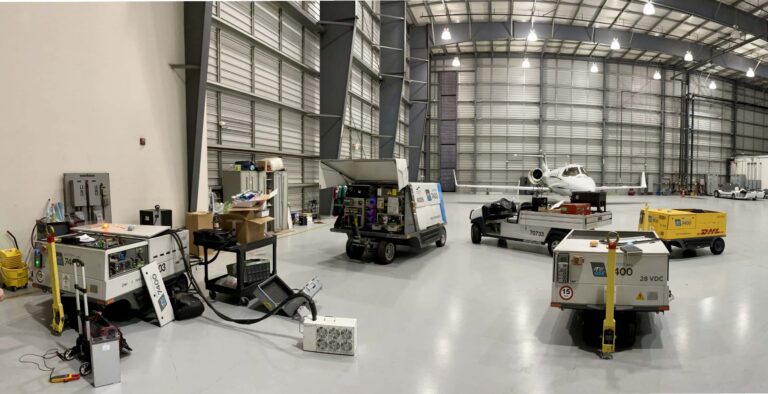





Electrify airport gates without major infrastructure upgrades. Learn how coordinated power management optimizes existing grid capacity.
Optimizing infrastructure before investing in major upgrades
Airport electrification is accelerating. Electric ground support equipment fleets are growing, sustainability targets are tightening, and charging demand is increasing across contact gates and remote stands.
What is not accelerating at the same pace is infrastructure capacity.
Grid constraints, limited gate-level power availability, and lengthy approval processes for substation upgrades make large-scale expansion both costly and slow. For many airports, the more immediate question is not how to build more — but how to optimize what already exists.
Infrastructure pressure is shaping electrification strategy
Expanding airport electrical infrastructure often involves:
- Significant capital investment
- Long engineering and approval cycles
- Operational disruption during upgrades
- Increased exposure to future load uncertainty
As a result, infrastructure planning is becoming closely tied to electrification strategy.
Rather than treating GPUs, PCAs, charging systems, and other assets as independent loads, airports are increasingly looking at coordinated load management across the gate environment.
This system-based approach allows power demand to be balanced more intelligently within existing supply limits.

Optimizing available capacity at the gate
Several practical measures can help airports increase flexibility before committing to major infrastructure expansion.
Power sharing technologies allow one unit to use surplus energy from another, reducing peak demand and easing strain on local grids.
Integrated charging solutions support the growth of electric GSE fleets while preventing charging bottlenecks.
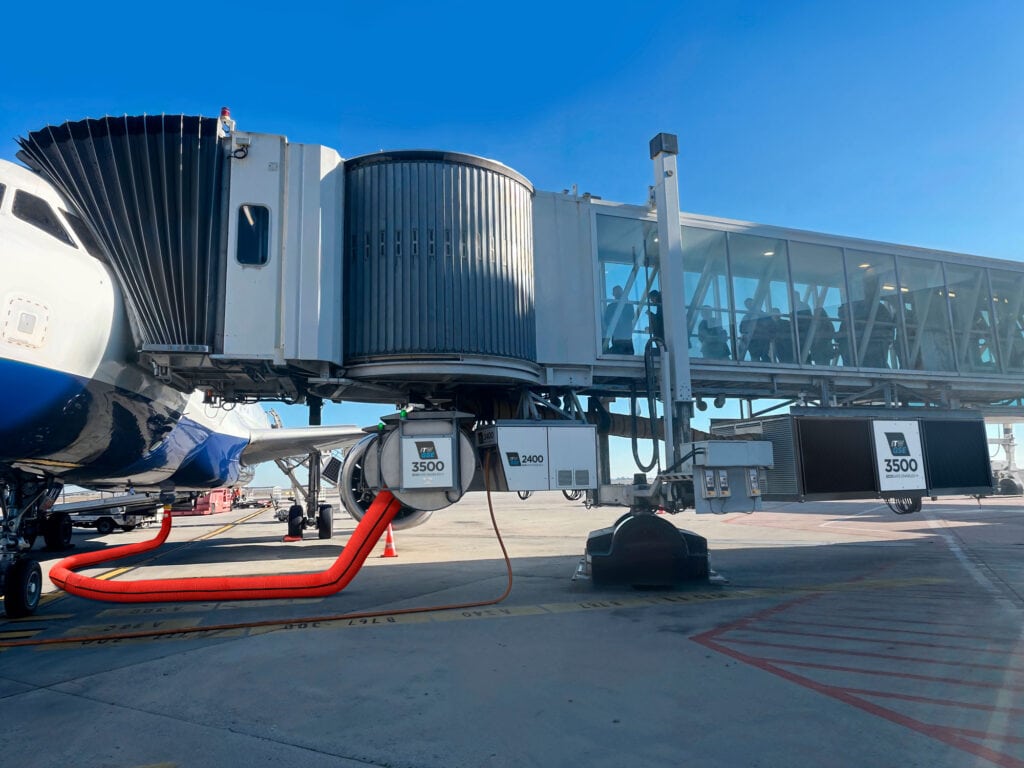
Flexible equipment — such as mobile pre-conditioned air units — can add cooling capacity at contact gates or remote stands without requiring fixed installation or significant electrical modification.
Individually, these solutions improve performance.
Coordinated together, they create a more resilient gate power strategy.
From isolated assets to coordinated gate systems
Electrifying gates successfully requires more than replacing diesel with electric equipment. It requires aligning electrification with infrastructure reality.
When equipment operates in coordination — sharing power intelligently, prioritizing loads, and managing charging demand — airports gain:
- Better utilization of existing grid capacity
- Reduced urgency for large-scale infrastructure upgrades
- Greater operational flexibility
- A scalable path toward lower-emission apron operations
This shift from isolated assets to coordinated systems allows airports to phase electrification based on operational priorities rather than infrastructure bottlenecks.
A practical path forward
For airports facing grid constraints, the most sustainable investment is often smarter power coordination — not immediate infrastructure expansion.
Approaches such as the EcoGate design framework demonstrate how electrification, power sharing, data exchange, and technical alignment can work together to strengthen gate-level power management.
By optimizing before expanding, airports can protect capital budgets while continuing to advance sustainability and operational performance.
Continue the conversation
If you are exploring how to electrify gates within existing infrastructure limits, we would welcome the opportunity to discuss your strategy.