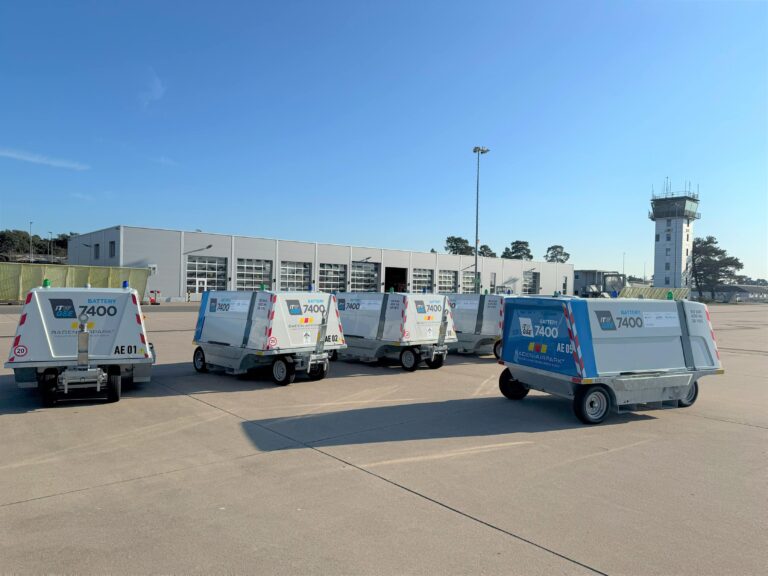




Airports and ground handlers are accelerating the shift to electric GSE.
But as fleets grow, a familiar challenge emerges: Charging doesn’t scale the same way.
Without coordination, charging quickly becomes a bottleneck — leading to congestion, increased downtime, and unnecessary operational pressure.
The issue isn’t the fleet.
It’s how charging is integrated into daily operations.
Traditionally, charging infrastructure has been treated as something separate from the gate — often centralized, static, and disconnected from real-time demand. That approach no longer holds.
With EcoGate, charging becomes part of the gate ecosystem — coordinated with GPUs, PCAs, and overall power availability. Instead of adding more infrastructure, the focus shifts to using existing power smarter.
Charging where operations happen
A key shift is moving charging closer to the point of operation.
By integrating charging directly at the gate, airports can:
- Reduce congestion at central charging stations
- Minimize towing and repositioning of equipment
- Enable opportunity charging during natural operational gaps
- Keep equipment where it is needed — ready for the next turnaround
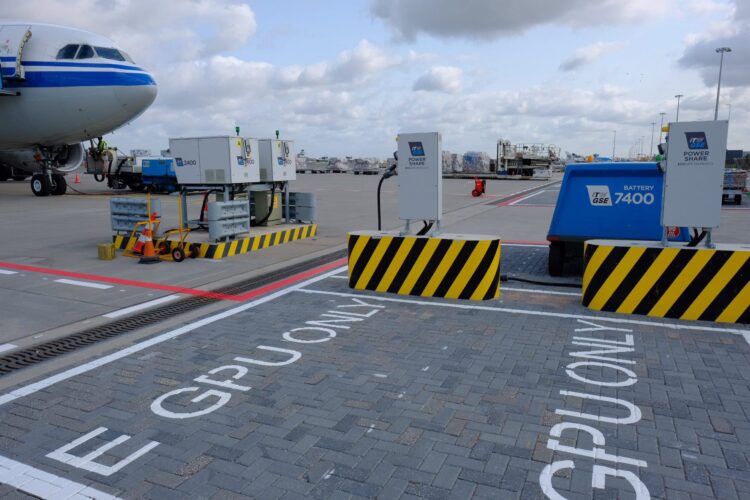
This is where solutions like Power Share and the DC Charger come into play.
Unlock unused capacity with Power Share
At most gates, installed power capacity is designed for peak demand — but rarely fully utilized.
ITW GSE Power Share enables airports to make use of this untapped potential by redistributing surplus power to other equipment.
It connects directly to existing gate equipment such as GPUs and PCAs and ensures that:
- Aircraft always get priority access to power
- Excess capacity can be used to charge eGSE
- Connected equipment is automatically managed based on availability
The result is simple but powerful:
More equipment can operate — and charge — using the same infrastructure.
High-speed, opportunity charging with the DC Charger
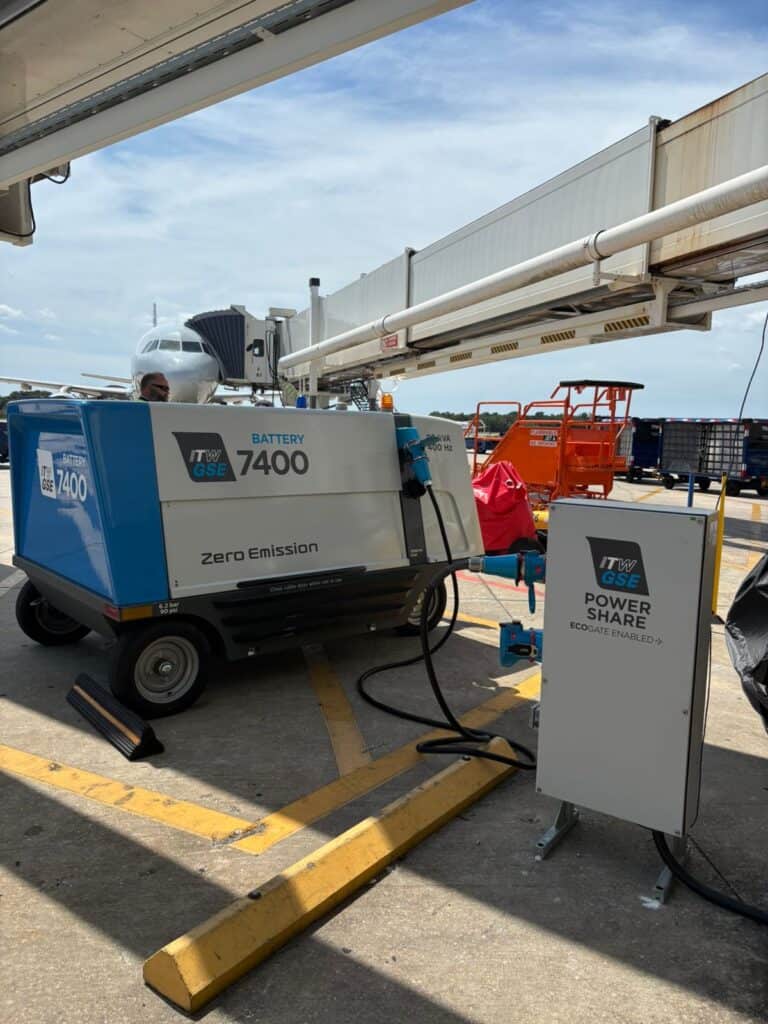
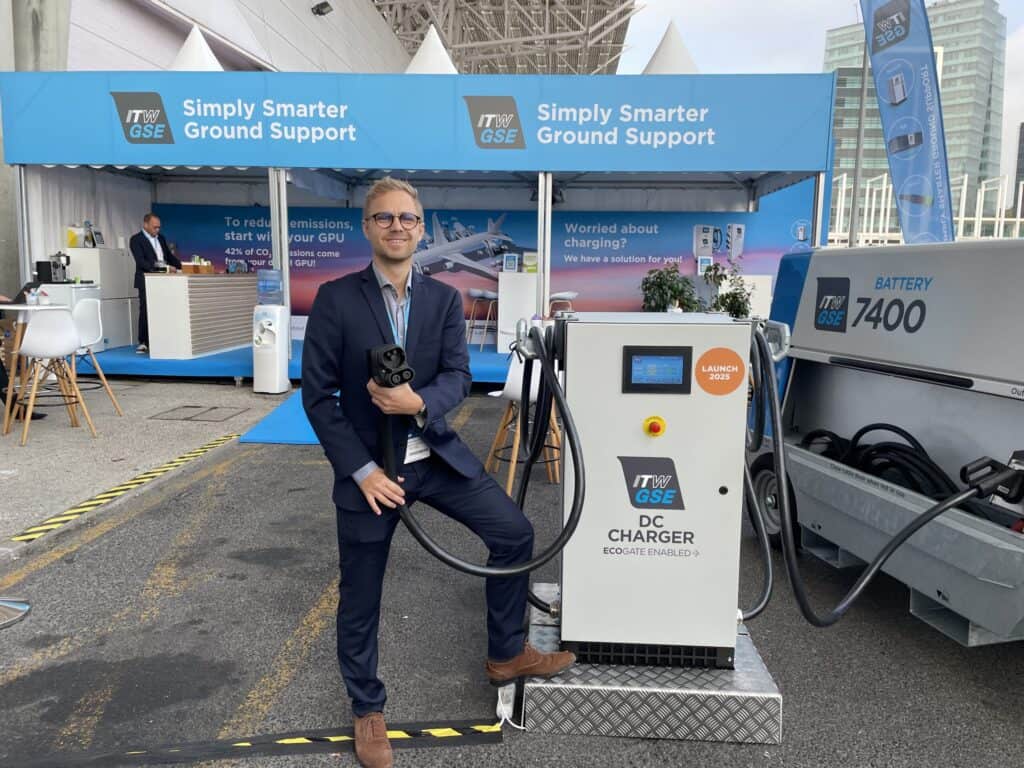
Designed specifically for aviation environments, the ITW GSE DC Charger enables high-speed, scalable charging directly at the gate or remote stand.
Key capabilities include:
- Integration with existing power infrastructure — no need for major upgrades
- Prioritization of aircraft power demand, with remaining capacity used for charging
- Support for opportunity charging, keeping fleets operational without disrupting turnaround schedules
- Scalable configurations to match different fleet sizes and operational needs
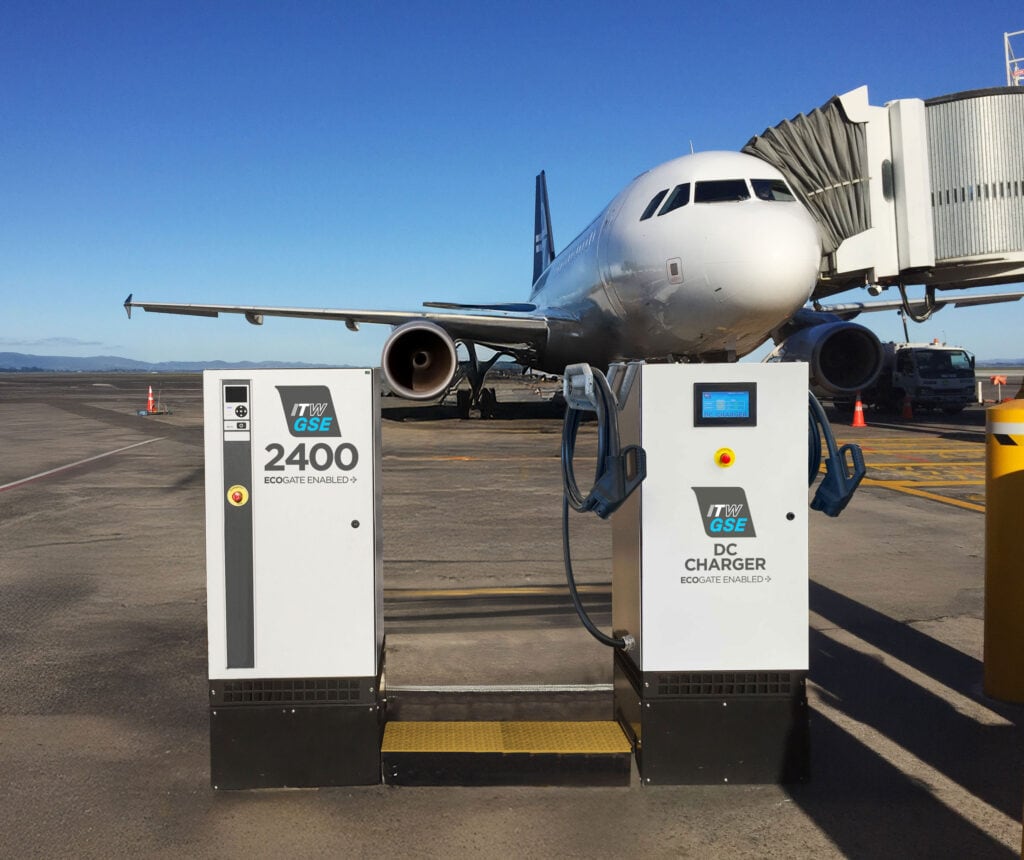
As illustrated in the installation examples, the DC Charger works alongside existing systems to distribute power efficiently — transforming surplus capacity into a reliable charging source.
Electrification — without slowing down operations
The combination of coordinated power sharing and integrated DC charging changes how airports approach electrification:
- No need for large-scale infrastructure upgrades
- No compromise on aircraft turnaround performance
- No growing queues at charging stations
Instead, charging becomes a natural part of gate operations — aligned with real-time demand and available capacity.
A system approach to scalable electrification
Charging bottlenecks don’t come from too many electric units.
They come from disconnected systems.
By integrating charging into the gate — and coordinating it with existing equipment — airports can scale electrification in a smarter, more operationally efficient way.