

search success chat linkedin google-plus telephone multimedia youtube linkedin instagram right-arrow mobile-phone
Support
Download Brochures
EcoGate
preloader

GSE Charging and Energy Management for Electric Airport Operations

As electric GSE fleets grow, charging becomes part of daily airport operations.

Airports need to keep electric ground support equipment available, avoid charging queues, and manage limited power capacity across gates, stands, and service areas.

This page explains how coordinated charging and energy management can help airports scale electric GSE without creating new operational bottlenecks.

Based on ITW GSE’s experience with gate equipment and electric GSE charging

We work with ground power, pre-conditioned air, charging and power management for airport operations, and we have done so for decades.

This page explains how charging can be planned as part of daily gate and apron operations using solutions such as Power Share, EcoGate, DC Charger, and Intelligent Power Management.

How do we avoid GSE charging bottlenecks?

GSE charging bottlenecks can be reduced by placing charging closer to operations and coordinating charging with available power capacity.

Charging bottlenecks often occur when too many units compete for the same charging infrastructure at the same time. This can create waiting time, congestion and reduced GSE availability.

To reduce charging bottlenecks, airports typically focus on gate-level charging, opportunity charging during idle periods, and coordinated power usage across charging, GPU and PCA.

ITW GSE supports this approach through solutions such as Power Share and integrated charging concepts within EcoGate.

Overview of charging and energy management challenges

Challenge What it means in practice What to consider first Read more
Charging bottlenecks Too many GSE units competing

for the same chargers during peak periods

Move charging closer to operations

and use opportunity charging

Charging bottlenecks

EcoGate

Limited gate power capacity GPUs, PCA and charging may

compete for available gate-level power

Prioritize aircraft-critical

systems and coordinate loads

Power Share

DC Charger

Simultaneous peak demand Charging several units simultaneously

can increase peak load and overload risk

Coordinate charging with

operational demand and idle periods

EcoGate

Intelligent Power management

Mixed gate and remote stand operations Charging infrastructure may not

support all operational areas equally

Combine fixed charging with

flexible and mobile charging setups

Power Share

DC Charger

Uncoordinated charging rollout Chargers may be installed without

alignment to operational workflows

Start with operational needs and

scale charging progressively

Avoid charging bottlenecks

EcoGate

Can charging be integrated into gate operations?

Yes. GSE charging can be integrated into gate operations when charging, GPU, and PCA are coordinated as one system.

At many airports, aircraft support systems and GSE charging depend on the same available power. If these loads are not coordinated, charging can compete with turnaround-critical functions.

A coordinated gate setup allows aircraft power and PCA to remain the priority, while charging uses available capacity when operational demand allows.

The ITW GSE EcoGate concept is designed around this type of system-based gate operation.

Why is GSE charging becoming an operational challenge?

Electric GSE fleets create new power demand across the airport, and the challenge is not only installing chargers.

It is making sure equipment is charged where and when it is needed, without creating queues, downtime, or unnecessary towing across the apron.

Working with GSE charging, airports need to consider:

  • Where charging should take place
  • How much power is available
  • Which equipment needs first-priority
  • How charging affects turnaround operations

Without a clear charging strategy, electrification can create new operational bottlenecks instead of reducing them.
How can airports use existing power more efficiently?

Airports can use existing power more efficiently by coordinating loads and sharing available capacity between connected equipment.

In many cases, the challenge is not only total grid capacity — but how power is used during daily operations.

To improve energy utilization, airports often focus on:

  • Avoiding simultaneous peak demand
  • Prioritizing aircraft-critical systems
  • Sharing unused capacity between equipment
  • Coordinating charging with operational demand

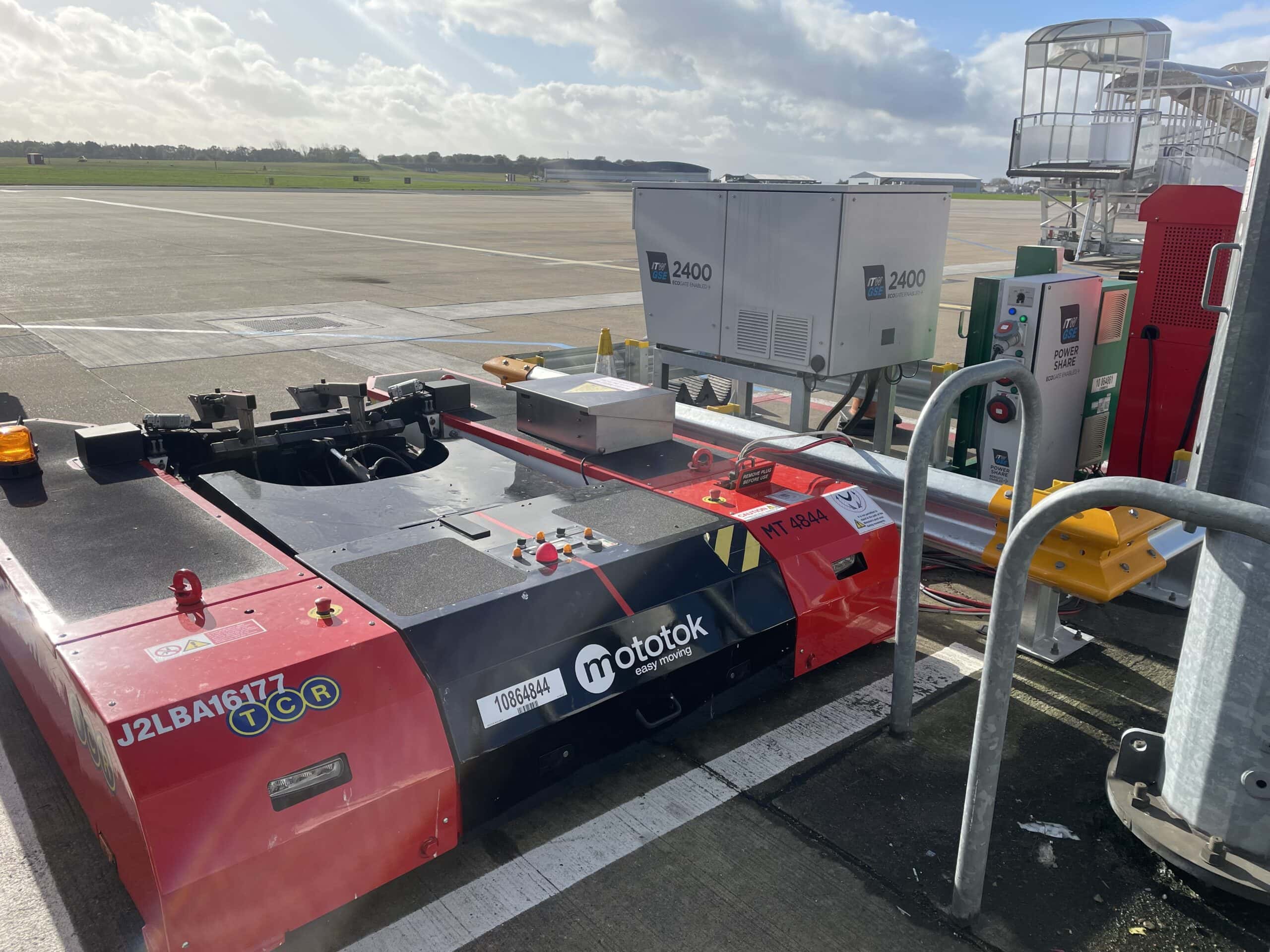
ITW GSE Power Share supports this approach by enabling available gate power to be used for charging electric GSE when capacity is available.
When and where should GSE be charged?

GSE should be charged where it creates the least operational disruption and where the equipment is already operating.

For some airports, centralized charging will remain useful for planned or overnight charging. For others, gate-level or remote stand charging can reduce towing, improve availability and support opportunity charging during natural idle periods.

The right setup depends on traffic flow, available power, gate layout and how the equipment is used throughout the day.

Feel free to reach out to our Sales team for a chat about your needs for charging.

Which charging setup fits your airport operation?

Situation What to consider Relevant ITW GSE solution
Too much equipment is waiting for chargers Move charging closer to daily operations Power Share

EcoGate

Gate power is shared between GPU, PCA and charging Coordinate and prioritize available power Intelligent Power Management

Power Share

Equipment is charged far from where it is used Reduce towing and support opportunity
charging
DC Charger
The airport has both gates and remote stands Combine fixed and flexible charging options DC Charger

Power Share

How do charging bottlenecks affect GSE availability?

Charging bottlenecks reduce GSE availability because equipment may spend time waiting, towing, or charging away from operations.

This can affect:

  • Equipment readiness during peak periods
  • Turnaround efficiency
  • Apron traffic and congestion
  • Overall fleet utilization

A strong charging strategy focuses not only on charger installation — but on keeping GSE available where and when it is needed.
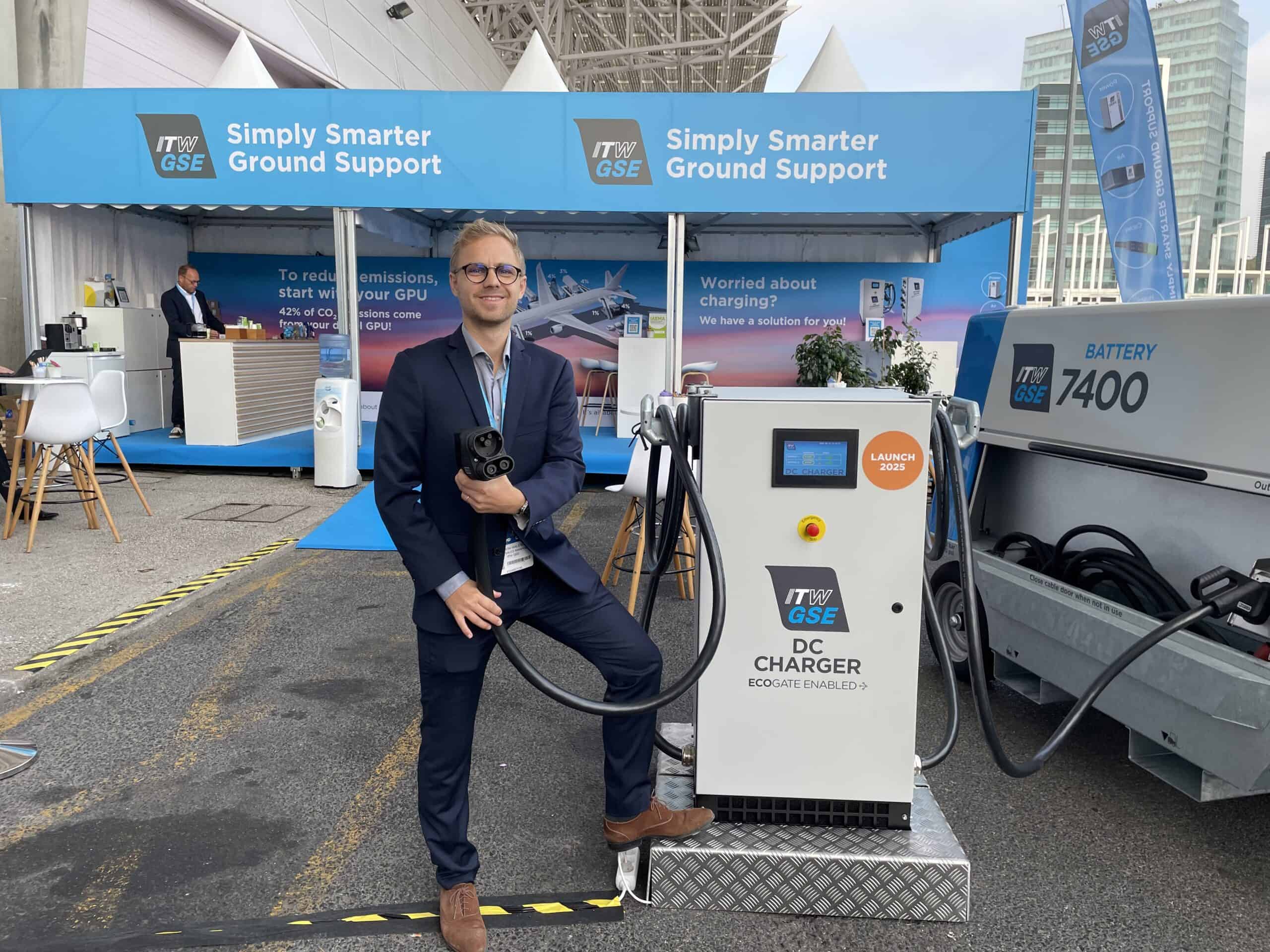
Martin Walsted with the DC Charger at an exhibition

What is the difference between centralized charging and gate-level charging?

Centralized charging places chargers in dedicated charging areas, while gate-level charging places charging closer to daily operations.

Centralized charging can work well for planned or overnight charging. Gate-level charging supports opportunity charging closer to where equipment is used.

Many airports combine both approaches to reduce towing, improve GSE availability and support different operational scenarios.

The right setup depends on traffic flow, infrastructure and operational priorities.

The system approach of EcoGate lets you combine your GSE to suite your many different daily operations.
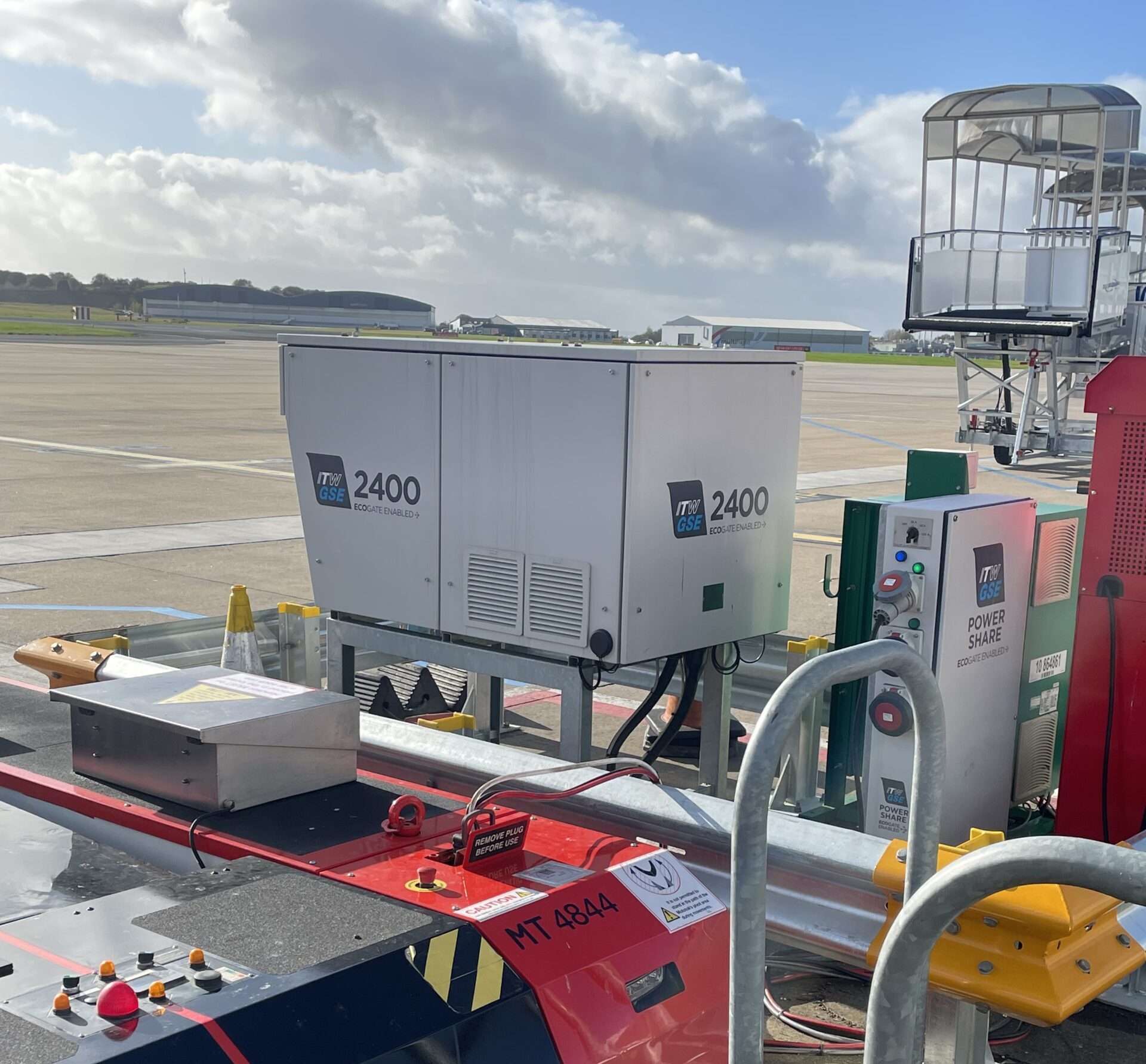
itw gse power share

Why does energy management matter for electric GSE fleets?

Energy management helps airports coordinate charging demand across gates, stands and operational areas.

As electric GSE fleets grow, simultaneous charging can increase peak load and place pressure on existing infrastructure.

Energy management helps airports:

  • Prioritize critical loads
  • Reduce overload risk
  • Coordinate charging with gate operations
  • Use existing infrastructure more efficiently

This becomes increasingly important when charging operates alongside GPUs, PCA systems and other gate equipment.

The ITW GSE Intelligent Power Management (IPM) is a system designed to prioritize the GPU all while the PCA is still running.

From charging equipment to charging strategy

Scaling electric GSE is not only about installing chargers.

It is about building a charging strategy that supports daily operations.

A strong charging strategy considers:

  • Where equipment operates
  • When equipment is available
  • Aircraft support requirements
  • Future electrification growth
  • Available infrastructure capacity

This helps airports reduce operational pressure while scaling electric GSE in a controlled way.
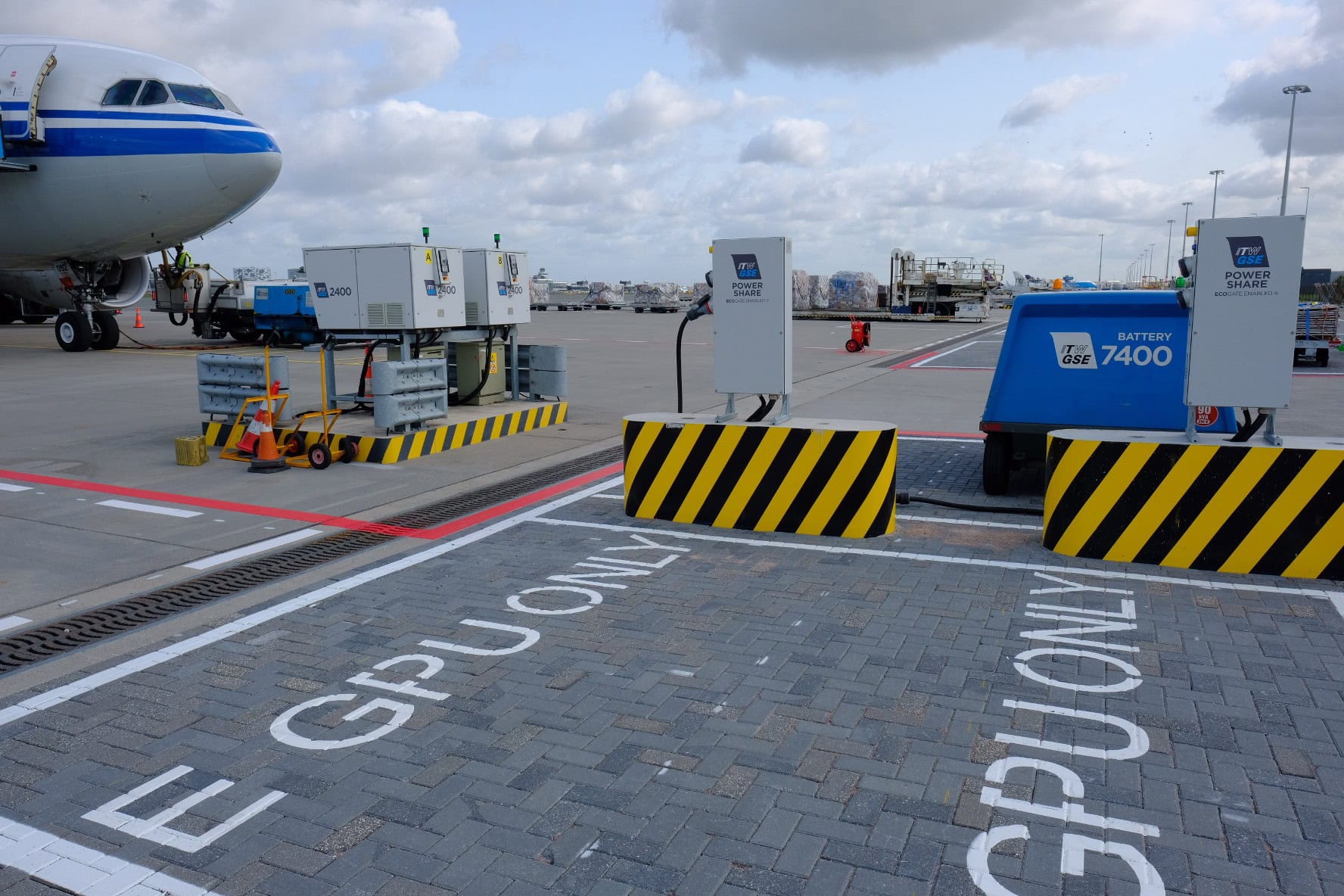
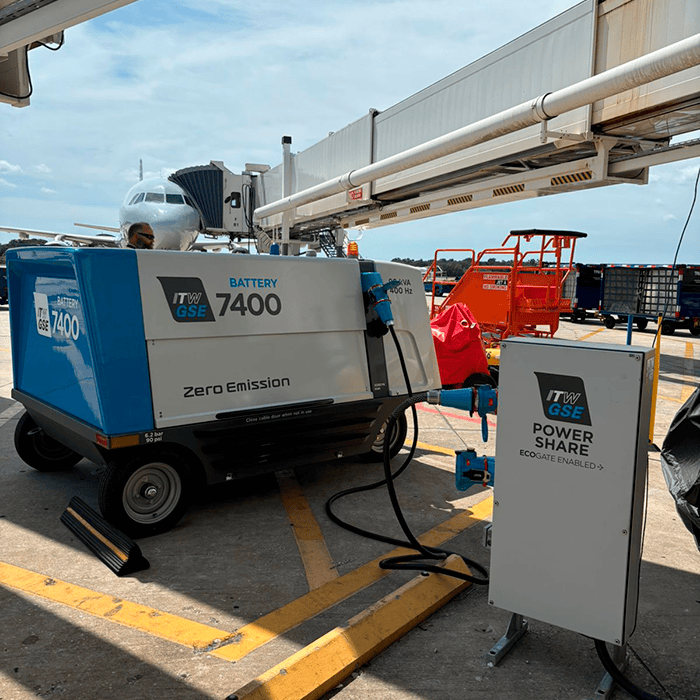
itw gse power share charger at the apron next to an aircraft and a 7400 battery driven ground power unit

Plan GSE charging as part of airport operations

Electric GSE charging works best when it is planned as part of the overall gate and apron operation.

Charging should be coordinated with aircraft turnaround, GPU and PCA demand, equipment availability and infrastructure capacity.

A coordinated approach can help airports reduce charging bottlenecks, improve operational reliability and scale electrification more efficiently.

The ITW GSE EcoGate system helps airports evaluate how charging, power sharing and coordinated gate operations can support long-term electrification goals.

ecogate dark image from itw gse

How Power Share, EcoGate, and Intelligent Power Management work together

EcoGate is ITW GSE’s system approach to smarter gate electrification. Instead of looking at GPUs, PCAs, chargers, cables, and power infrastructure as separate units, EcoGate brings them together in one coordinated setup where power is used where it creates the most operational value.

Power Share and Intelligent Power Management both support this system approach.

Together, they help airports get more out of the power they already have. EcoGate provides the overall system thinking. Intelligent Power Management helps coordinate power use at the gate, while Power Share makes it possible to turn available excess capacity into practical charging opportunities.

The result is a more flexible, efficient, and scalable way to electrify gate operations - often without the need for major infrastructure upgrades.

Frequently Asked Questions

How do airports avoid GSE charging bottlenecks?

Airports can avoid GSE charging bottlenecks by placing charging closer to operations, using opportunity charging, and coordinating charging with available power capacity.

The ITW GSE Power Share lets you charge your eGSE inbetween the turnarounds at the point of use of your eGSE.

When should GSE be charged?

GSE should be charged when it causes the least disruption to daily operations, including during idle periods, turnaround windows or overnight charging.

Can GSE charging be integrated into gate operations?

Yes. GSE charging can be integrated into gate operations when aircraft power, PCA and charging are coordinated within the same power environment.

Check out the EcoGate system to see how charging can be integrated in the gate operations.

What is opportunity charging for GSE?

Opportunity charging means charging electric GSE during natural idle periods instead of waiting for a dedicated charging cycle.

How can airports charge electric GSE without overloading infrastructure?

Airports can reduce overload risk by coordinating loads, prioritizing aircraft-critical equipment and avoiding simultaneous peak demand.

What role does Power Share play in GSE charging?

Power Share allows available power from selected gate equipment to be used for charging electric GSE when capacity is available.

What role does EcoGate play in charging and energy management?

EcoGate supports a system-based approach where charging, PCA, GPUs and power availability are coordinated across the gate.