



Sustainability is becoming a key priority across aviation, and ground handling plays an important role in reducing emissions at airports. While much attention is given to aircraft technology and sustainable aviation fuels, significant improvements can already be achieved on the ground.
By electrifying equipment, reducing APU use, and using energy more efficiently, ground handlers and airports can lower emissions and improve the working environment on the apron.
Replace diesel equipment with electric alternatives
One of the most effective steps is replacing diesel-powered ground support equipment with electric solutions.
Electric GSE can help reduce:
-
Local CO₂ emissions
-
Noise on the apron
-
Fuel consumption
-
Maintenance requirements
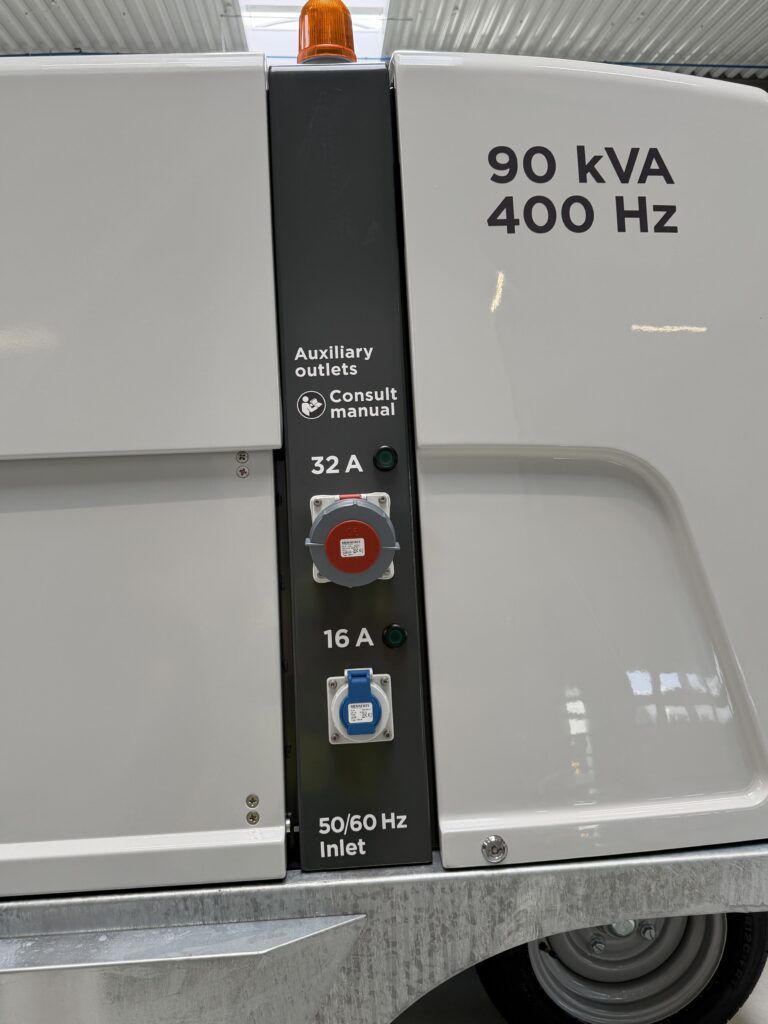
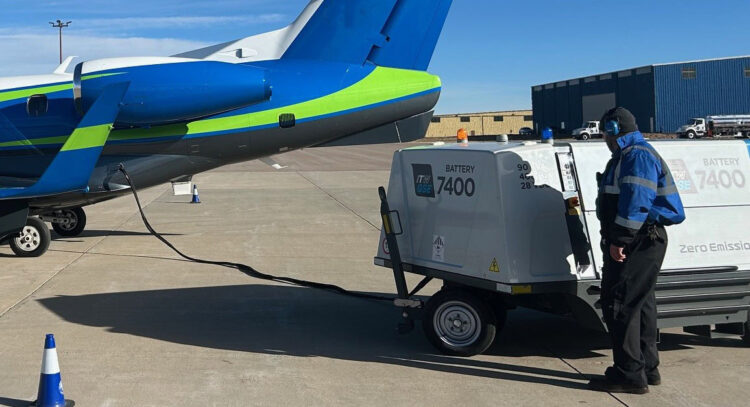
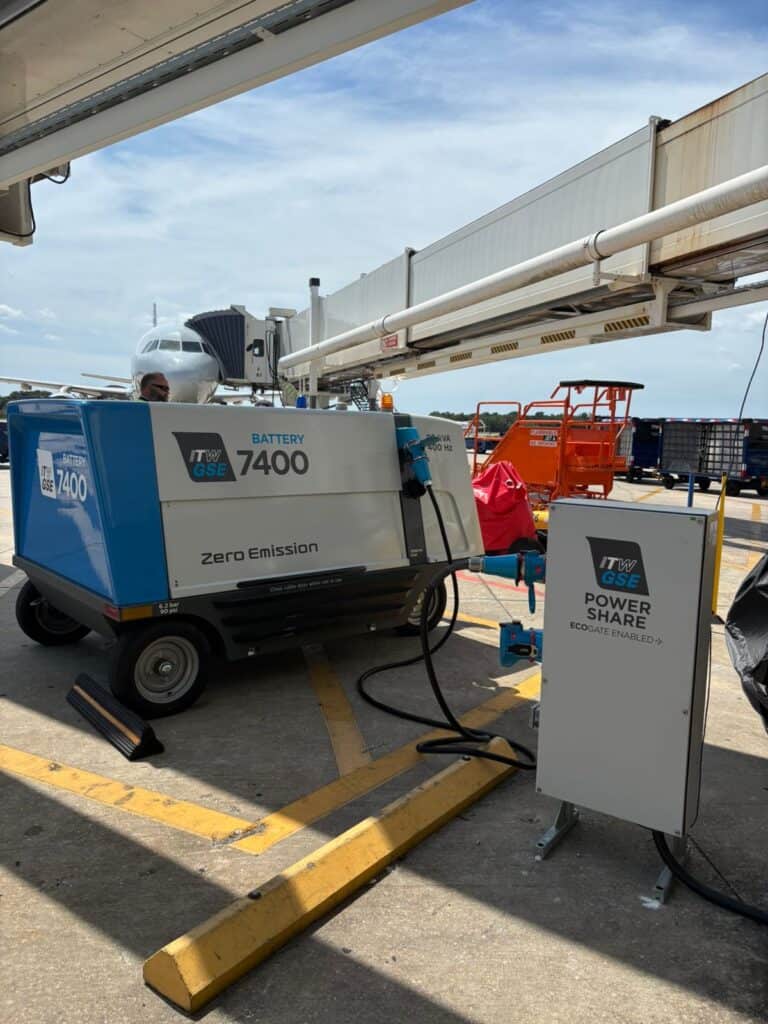
Battery-powered equipment such as the ITW GSE 7400 eGPU allows ground handlers to supply aircraft with clean electrical power while reducing emissions and improving working conditions for ramp personnel.
Reduce APU use during aircraft turnaround
Aircraft auxiliary power units (APUs) are often used while aircraft are parked at the gate. However, APUs generate both emissions and noise.
Ground-based solutions allow aircraft to shut down the APU during turnaround by supplying power and cooling directly from the gate.
Typical APU-off infrastructure includes:
-
400 Hz ground power units supplying electrical power
-
Pre-conditioned air units (PCA) providing cooling and ventilation
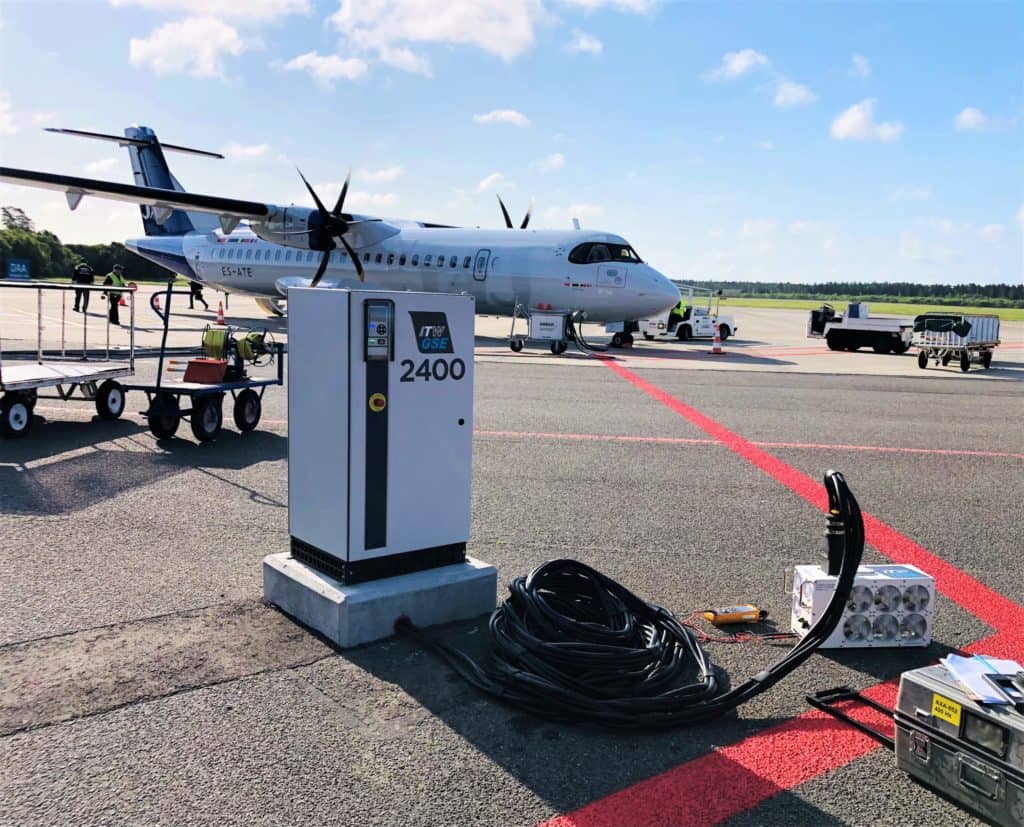
Solutions such as the ITW GSE 3500 PCA and ITW GSE 2400 Compact 400 Hz GPUs help airports and ground handlers support quieter and cleaner gate operations.
Make better use of available power
Many airports want to electrify more ground operations but face limited grid capacity. Expanding infrastructure can therefore be challenging.
A coordinated approach to energy use can help. The EcoGate concept enables gate equipment to work together through electrification, power sharing, data sharing, and technical synergy. By coordinating power consumption across units, airports can connect more equipment within existing infrastructure and expand electrification in phases.
Plan charging infrastructure for electric GSE
As electric ground support equipment becomes more common, charging infrastructure becomes increasingly important.
Well-planned charging solutions can help operators:
-
Avoid charging bottlenecks
-
Improve equipment availability
-
Support larger electric fleets
-
Use available energy more efficiently
Solutions such as DC Chargers and Power Share help airports and handlers build scalable charging setups that support future electrification.
A gradual transition
Ground handling operations cannot change overnight. Many airports and handlers therefore take a phased approach to sustainability.
Typical first steps include:
-
Introducing electric GPUs
-
Installing PCAs at selected gates
-
Adding charging infrastructure
-
Expanding electrification where it delivers the most value
These steps can already deliver measurable environmental benefits.
Moving toward sustainable ground handling
A more sustainable ground handling industry will be built on electrification, efficient energy use, and infrastructure that supports APU-off operations.
Electric GPUs, PCA systems, charging infrastructure, and coordinated gate solutions all contribute to reducing emissions and improving airport operations.
By gradually implementing these solutions, ground handlers and airports can move toward cleaner and more efficient ground operations.