

Airport Sustainability, APU Reduction and Compliance
Airports can reduce emissions from ground operations by reducing APU usage, using electric ground power unit and pre-conditioned air units, and preparing gate infrastructure for electrification.
The key is to connect sustainability goals with daily airport operations, so power, air and charging work together at the gate.
This page explains how airports can reduce emissions from ground operations, support APU reduction, and prepare for evolving airport electrification requirements.
Overview of sustainability and compliance challenges
| Challenge | What it means in daily operations |
First step to consider | Relevant ITW GSE solution |
| Aircraft rely heavily on APU while parked |
Aircraft depend on onboard systems during turnaround or parking |
Improve access to reliable gate power and air |
GPU
|
| Emissions need to be reduced at the gate |
Gate operations and ground support equipment contribute to local emissions and sustainability targets |
Look at where electrification can have the greatest operational impact |
Airport electrification
|
| Power capacity is limited | Electrification plans are constrained by available power |
Use existing capacity more efficiently before expanding infrastructure |
Power Share |
| Power, air, and charging are managed separately | Gate operations become harder to coordinate as electrification expands |
Connect systems in a coordinated setup |
EcoGate |
| More electric GSE is being introduced | Charging and energy use need to be planned around daily operations |
Plan charging and power management together |
DC Charger |
| Electrification needs to happen in phases | Infrastructure investments need to support both current operations and future requirements |
Understand local and regional requirements, including funding opportunities |
Airport electrification planning |
How can airports reduce CO₂ emissions from ground operations?
Airports can reduce CO₂ emissions by replacing diesel-powered equipment, reducing APU usage, and improving the use of fixed gate infrastructure.
Many airport emissions occur while aircraft are parked at the gate and during ground handling activities. These emissions can often be reduced through electrification and more efficient use of available infrastructure.
The greatest impact is typically achieved by targeting the largest emission sources first and developing a phased implementation plan.
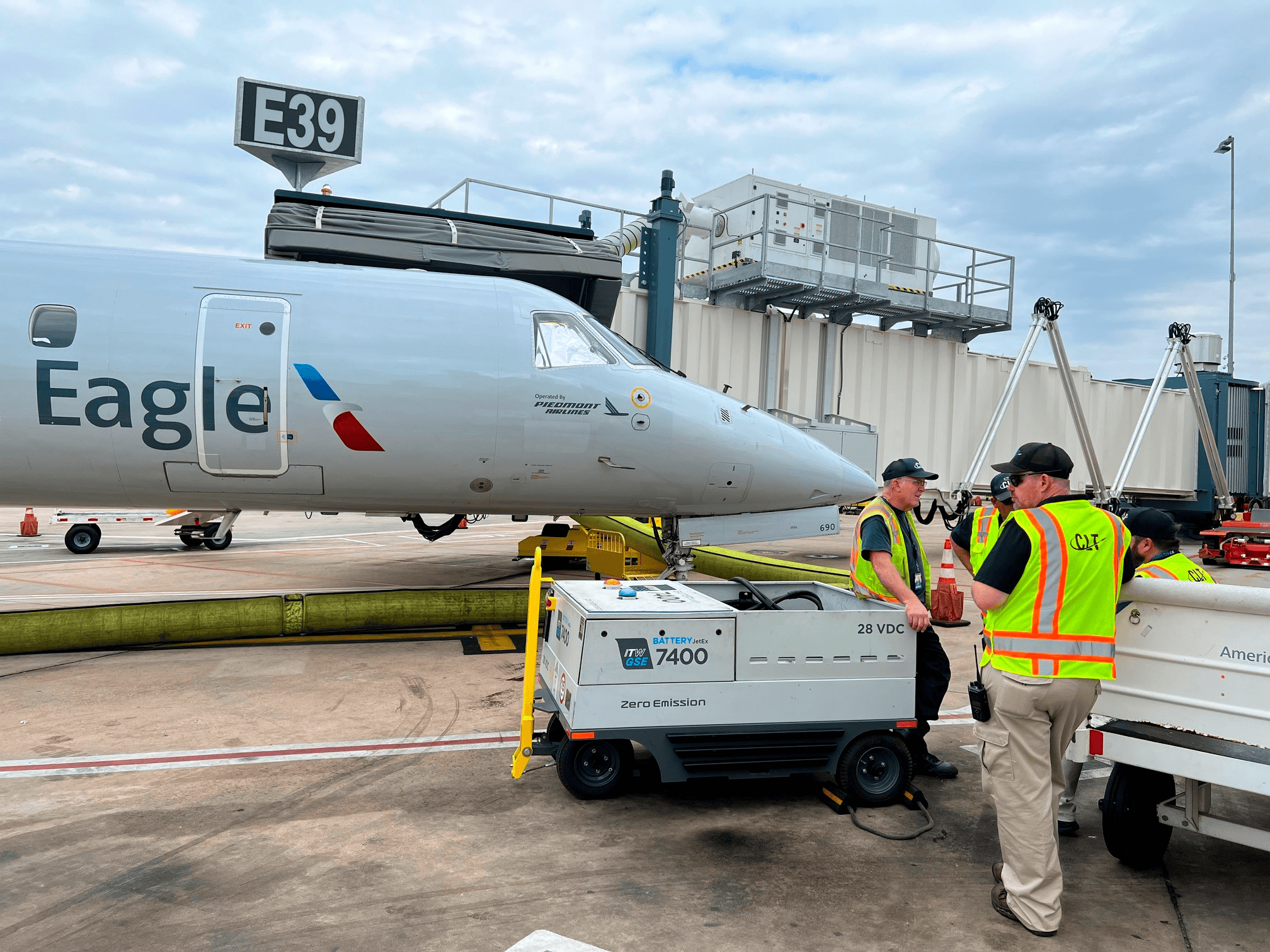
Why is APU reduction important?
APU reduction is one of the most effective ways to reduce emissions and fuel consumption while aircraft are parked.
The Auxiliary Power Unit provides onboard electricity and air conditioning, but it consumes fuel and produces emissions, noise, and operating costs.
Reducing APU usage can help airports and airlines improve sustainability performance while supporting a more comfortable apron environment.

When should PCA replace APU usage?
PCA should replace APU-based cooling whenever suitable gate infrastructure is available and operational requirements allow it.
Aircraft typically require both electrical power and conditioned air while parked. When a PCA unit and a GPU are available, the aircraft can often reduce or eliminate the need for APU operation.
This helps lower fuel consumption, reduce emissions, and improve the passenger experience during boarding and turnaround.
What role does gate infrastructure play in airport sustainability?
Gate infrastructure plays a central role in reducing emissions from parked aircraft.
Without access to gate power and PCA, aircraft may need to rely on onboard systems for extended periods. Reliable infrastructure enables aircraft support functions to be delivered from the ground instead.
Many airport sustainability initiatives therefore focus on expanding the availability and utilization of gate equipment rather than relying solely on fleet changes.

What regulations apply to airport electrification?
Airport electrification requirements vary by country, airport operator, and regulatory framework.
In Europe, initiatives such as the AFIF funding program and the TEN-T regulation support increased airport electrification and infrastructure development. Other regions are pursuing similar goals through local sustainability programs and emission reduction targets.
Airports should monitor both current regulations and future policy developments when planning long-term investments.
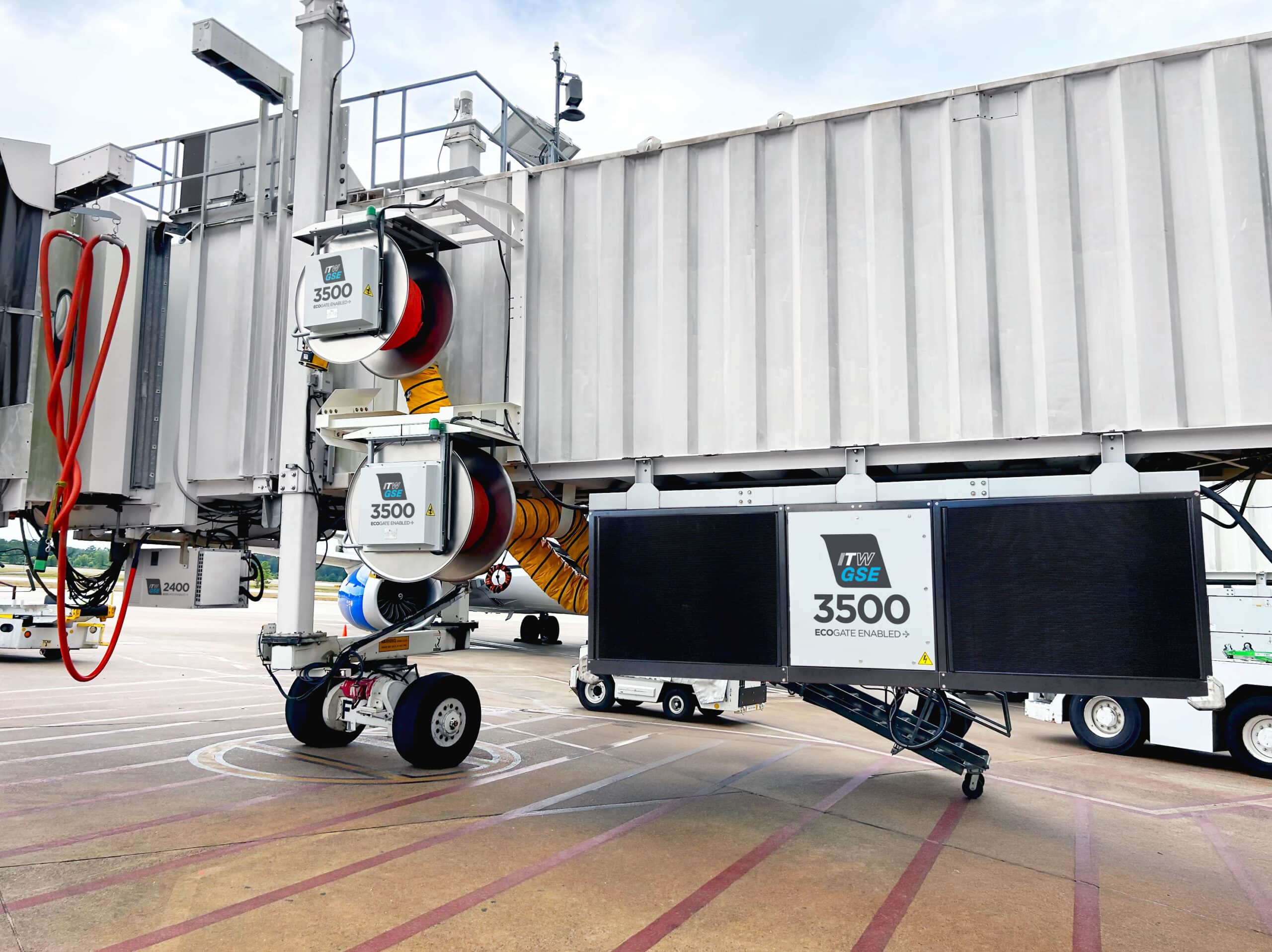
How can airports prepare for future sustainability requirements?
Airports can prepare by developing scalable electrification strategies and prioritizing infrastructure that supports long-term environmental goals.
The challenge is often not predicting the exact regulations that will emerge, but creating systems that can adapt as requirements evolve.
A phased approach allows airports to improve sustainability performance today while maintaining flexibility for future developments.
Can airports improve sustainability without major infrastructure upgrades?
Yes. Many airports can achieve meaningful improvements before investing in major infrastructure expansion.
Opportunities may include:
- Reducing APU usage
- Optimizing existing gate infrastructure
- Improving power utilization
- Introducing electric GSE in selected operational areas
System-based approaches can help airports get more value from existing assets while supporting gradual electrification.
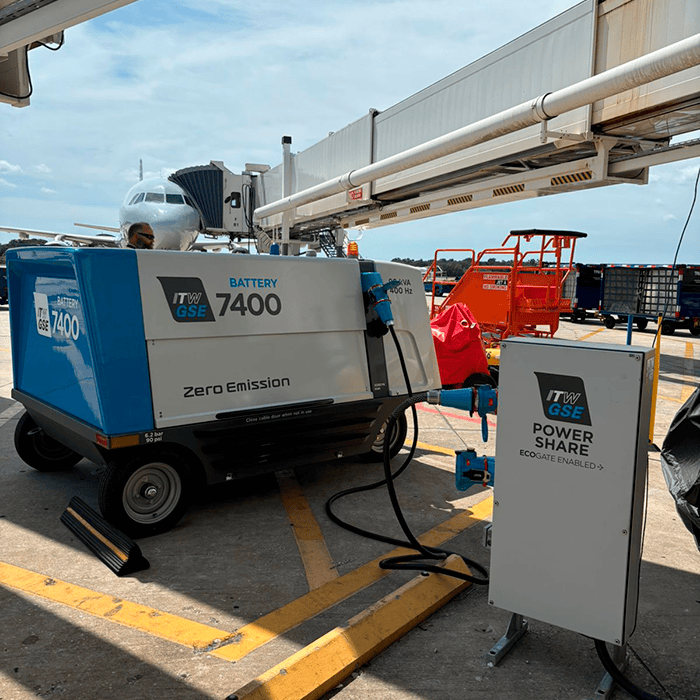
How do sustainability goals and operational goals work together?
Sustainability initiatives are most successful when they support operational performance rather than compete with it.
Airports need solutions that reduce emissions without creating delays, bottlenecks, or additional complexity for airlines and ground handlers.
This is why many airports focus on operational efficiency, infrastructure utilization, and coordinated electrification strategies as part of their sustainability programs.
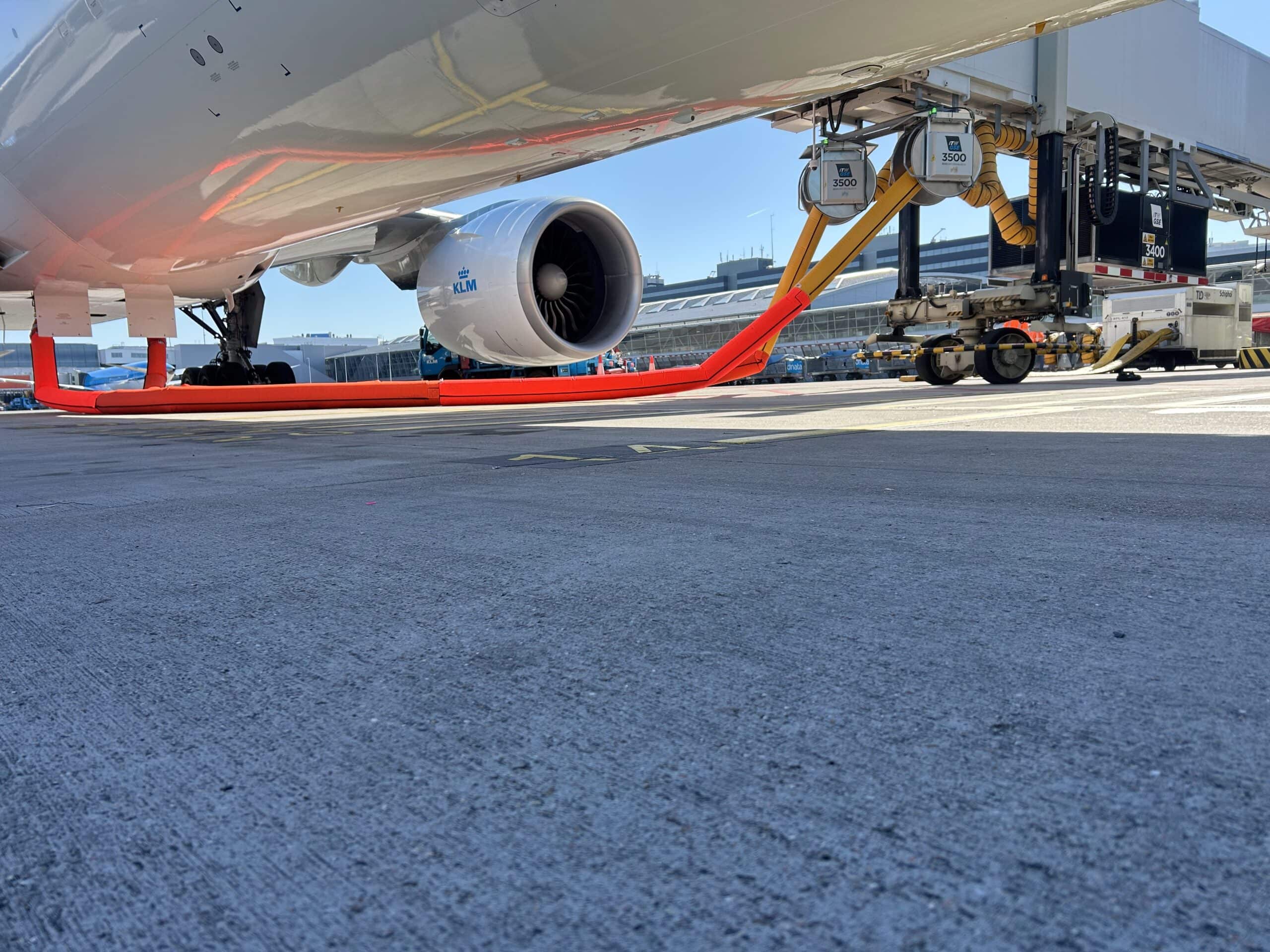
From sustainability projects to sustainable operations
Long-term sustainability is not achieved through individual projects alone.
It requires operational practices, infrastructure planning, and equipment strategies that support environmental goals every day.
The most successful airports typically combine emission reduction initiatives with operational improvements, creating benefits for passengers, airlines, airport operators, and the environment.
Support sustainability through coordinated gate operations
Reducing emissions often starts at the gate.
By coordinating GPUs, PCA systems, charging infrastructure, and electric GSE, airports can reduce reliance on onboard aircraft systems and improve the use of available power.
The EcoGate approach supports this type of coordinated operation by helping airports integrate electrification, power sharing, and gate infrastructure into a more efficient overall system.

Questions?
Talk to us about how ground power, PCA, charging, and energy
management can support your airport’s operational and sustainability goals.

Frequently Asked Questions
How can airports reduce APU usage without disrupting turnaround operations?
Airports can reduce APU usage by providing reliable ground power (GPU) and pre-conditioned air (PCA) at the gate. When both systems are available and properly coordinated, aircraft can often switch off the APU without affecting turnaround efficiency.
How can existing gate infrastructure support APU reduction?
When should airports consider Power Share as part of electrification planning?
Airports should consider Power Share when existing gate power limits the expansion of electric GSE charging. Sharing available capacity can help optimize infrastructure use while ensuring aircraft support systems remain the priority.
Check out the Power Share.
How does EcoGate support coordinated gate operations?
EcoGate brings together gate equipment such as GPUs, PCA units, charging solutions, and power management into one coordinated system. This helps airports improve infrastructure utilization while supporting reliable and scalable electrification.
Check out the EcoGate system approach.
What should airports consider before expanding charging infrastructure?
Before expanding charging infrastructure, airports should assess operational workflows, equipment usage, available power capacity, and future fleet growth. Optimizing existing infrastructure may reduce or delay the need for major investments.
Can APU reduction and GSE electrification be planned as one strategy?
Yes. Both initiatives depend on reliable gate infrastructure and efficient power management. Planning them together can help airports improve sustainability while making better use of existing electrical capacity.
Check out if 'Intelligent Power Management' can help your APU reduction.
How can airports phase electrification without overinvesting too early?
Airports can phase electrification by focusing on the areas with the greatest operational or environmental impact first. A scalable, system-based approach allows infrastructure and electric GSE to expand as operational needs grow, reducing the risk of premature investment.
Check out the EcoGate system approach.
Does airport electrification help reduce CO₂ emissions?
Yes. Airport electrification can reduce emissions from both ground support equipment and parked aircraft operations.
What regulations support airport electrification?
Requirements vary by region, but programs such as AFIF and the TEN-T regulation support airport electrification initiatives in Europe.
Can airports improve sustainability without expanding infrastructure?
In many cases, yes. Optimizing existing infrastructure and reducing APU usage can provide significant sustainability benefits before major infrastructure investments are required.